Asian Art at the Appleton Museum of Art
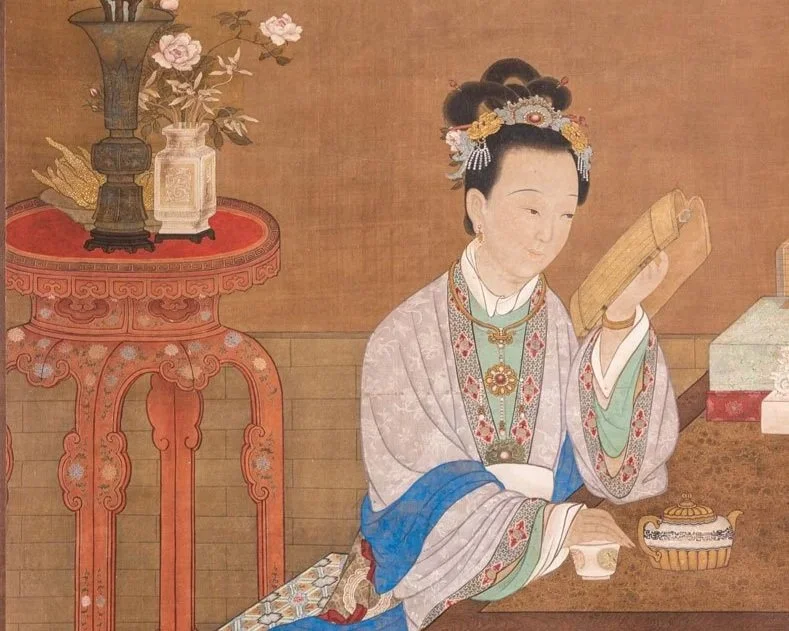
Zhao Qingjian (attributed), Beauty Reading a Book, Late 18th to 19th century, Appleton Museum of Art, Ocala. Gift of Arthur I. Appleton
One of the largest collections at the Appleton Museum of Art at the College of Central Florida in Ocala is of works from China, India, Japan, Tibet and Southeast Asia. Buddhist art is represented by Chinese, Japanese, Indian, Tibetan, Thai and Burmese sculptures and textiles. The Chinese works feature a number of important ceramic pieces including Tang Dynasty horse and guardian figures, rare celadon funerary vases and examples of Chinese export art. The art of Japan includes a variety of netsuke, Meiji era bronzes and kimono. Two ongoing exhibitions feature highlights:
Ancient Pathways: A Legacy of Trade
The Silk Road wasn’t just one road but a vast network of land and sea trade routes that started around the 2nd century BCE. It connected the far reaches of China with the Mediterranean Sea, stretching over 4,000 miles through challenging terrains like harsh deserts, towering mountains and fertile plains.
The exhibition looks at art associated with this network, born during China’s Han Dynasty, as they sought profitable trade routes. The name ‘Silk Road’ comes from the lucrative silk trade, but it was more than that. It was a bustling highway where not just goods, but ideas, cultures and religions were exchanged among great civilizations like China, Rome and Persia. This exchange continued for more than a millennium, peaking during China’s golden ages — the Tang and Song dynasties (618-1279 CE).
Drawn from the permanent collection, Ancient Pathways: A Legacy of Trade highlights the importance of international commerce and trade via the Silk Road through the art and objects on display.
Exposition, Empire and Expression: Japanese Global Art 1870s-1970s
Commodore Matthew Perry (1794-1858) led two United States Navy expeditions to Japan in the 1850s to forcibly open global trade ports. Exposition, Empire and Expression showcases the impact over the subsequent century on Japanese artists and global art.
Japanese bronze artists were highlighted at various World Fairs and international expositions in Europe and North America during the late 19th and early 20th centuries. Alongside the global appetite for colorful woodblock prints, fairs also sold Japanese bronze masterworks inlaid with silver and gold to many wealthy art patrons and museums. From the early 1900s through 1940s, Japan’s industrial prowess and military forces impacted Japanese formal and everyday fashion. Iconic kimono ensembles adorned with ships, planes, trains and artillery aligned Japan’s citizens with Imperial empire-building goals in East Asia and beyond. In post-World War II Japan, avant-garde artists worked across multiple media styles and techniques to embrace global art trends such as experimental film and painting techniques like abstract expressionism.