Epic of the Northwest Himalayas: Pahari Paintings from the “‘Shangri’ Ramayana”
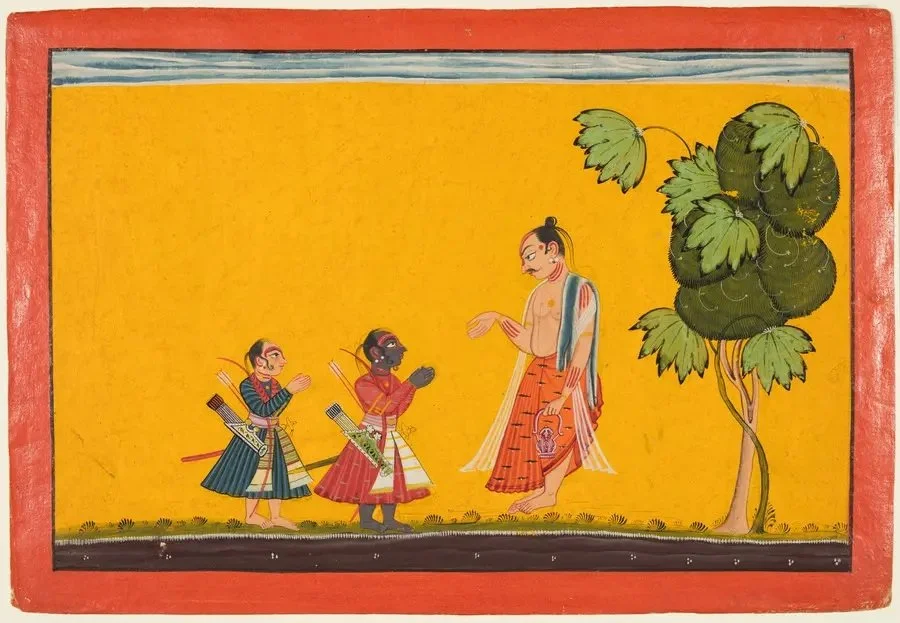
Northern India, Pahari kingdoms, Rama and Lakshmana with the sage Vishvamitra, from the "Shangri" Ramayana, c. 1700. National Museum of Asian Art, Smithsonian Institution; Purchase and partial gift from the Catherine and Ralph Benkaim Collection—Funds provided by the Friends of the National Museum of Asian Art, S2018.1.9
In this exhibition, forty paintings are reunited from a widely dispersed pictorial series that presents the story of the Hindu divine hero Rama. The timeless tale, more than 2,000 years old, remains a cultural force across southern Asia. Potent themes of righteousness, vengeance, and loyalty are explored through dramatic episodes in which demons are vanquished, lovers are separated, and monkeys, bears, and a man-eagle save the day. Magic abounds, and emotions fly with warriors’ arrows. Three digital stations present more than 100 gently animated images of paintings from multiple collections reassembled into their original episodic sequences.
Created with blazing colors for a royal collection around 1700, the “Shangri” Ramayana has been a beloved and enigmatic series among scholars and collectors for the past century. New evidence from previously unpublished paintings reveals many more artistic styles and triple the number of total folios than have been previously recognized. It argues in favor of a collaborative model of production involving artists from across the alpine region of Pahari India, which straddles the present-day state of Himachal Pradesh and that of Jammu and Kashmir.
Twelve lenders generously contributed to this focused exhibition. The unbound pictorial series began to be divided as early as the 1760s, suggesting that its spiritual merit was intended to be shared among multiple owners. Its title derives from the kingdom of Shangri, where a member of the royal family sold his 275 folios to a dealer in Delhi, beginning in 1962. Hundreds more paintings, however, have been in other royal collections.
The exhibition celebrates the publication of the Catherine Glynn Benkaim and Ralph Benkaim Collection of Pahari paintings, which includes three pages of the “Shangri” Ramayana that are on view and contextualized in Epic of the Northwest Himalayas.