Franz Xaver Messerschmidt
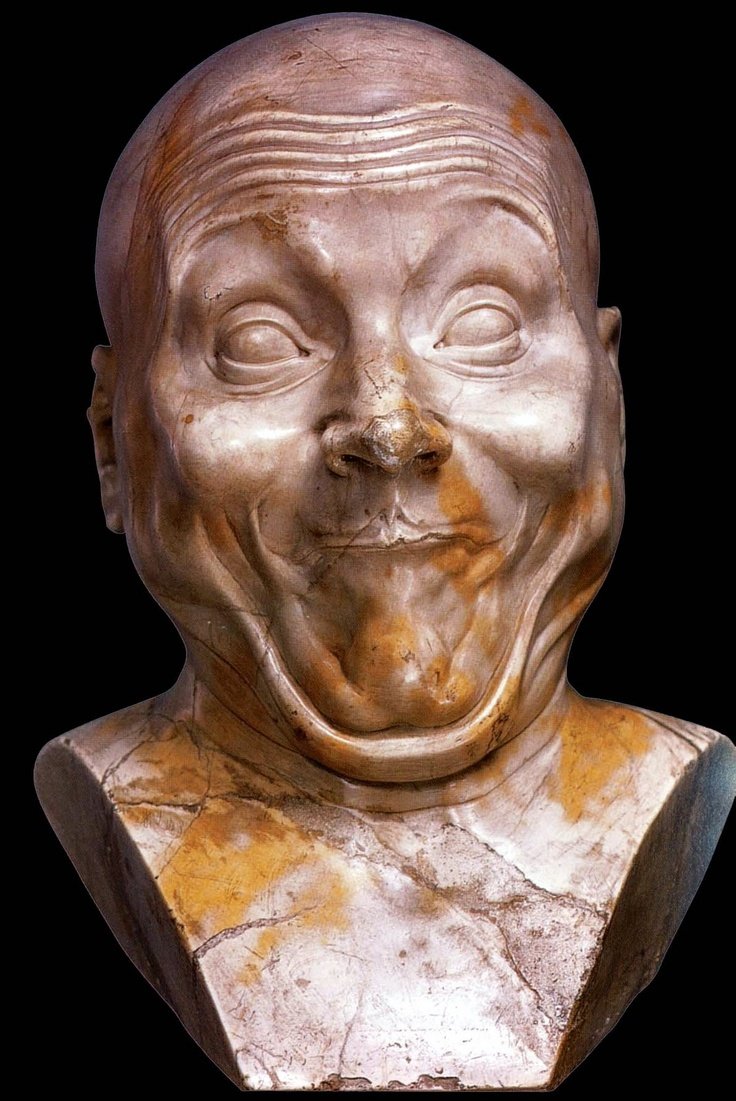
Franz Xaver Messerschmidt. A Mischievous Wag, 1770/1783. “Character Head” No. 6. © Belvedere, Vienna. Photo: © Belvedere, Vienna
From around 1769, the portraits by sculptor Franz Xaver Messerschmidt (1736–1783) reflected a new image of humanity, permeated with the ideas of the Enlightenment: The desire to portray people as individuals is increasingly replacing Baroque representation. Moreover, the personalities and patrons portrayed—such as Maria Theresia Felicitas von Savoy-Carignan, physicians Gerard van Swieten and Franz Anton Mesmer, and art writer Franz Christoph von Scheyb—shed light on the cultural, political, and scientific world of the eighteenth century.
This exhibition presents Messerschmidt as an artist at a cultural and political turning point in history. This is demonstrated by his portraits of personalities from his day: members of the court and the aristocracy, scholars, scientists, and writers. The exhibition takes a fresh approach to his famous “Character Heads” and examine them as a phenomenon of their time. Furthermore, it will explore the many myths shrouding Messerschmidt and his art.
For all their fame Messerschmidt’s “Character Heads,” which he started working on in about 1770, remain a puzzle. The psychopathological interpretation—extremely popular since the twentieth century—is a narrow lens through which to view these objects and ignores the fact that the sculptor was responding to the profound social and scientific changes of the eighteenth century in his work. The exhibition aims to situate Messerschmidt’s “Character Heads” in the discourse about the study of facial expressions and to read them as a phenomenon of their time. Comparisons with works by artists such as Joseph Ducreux , William Hogarth und Jakob Matthias Schmutzer help convey that the fascination with the face (and its aberrations) was by no means unique in this period.