Hidden Insights: Looking at the Backs of Portrait Miniatures
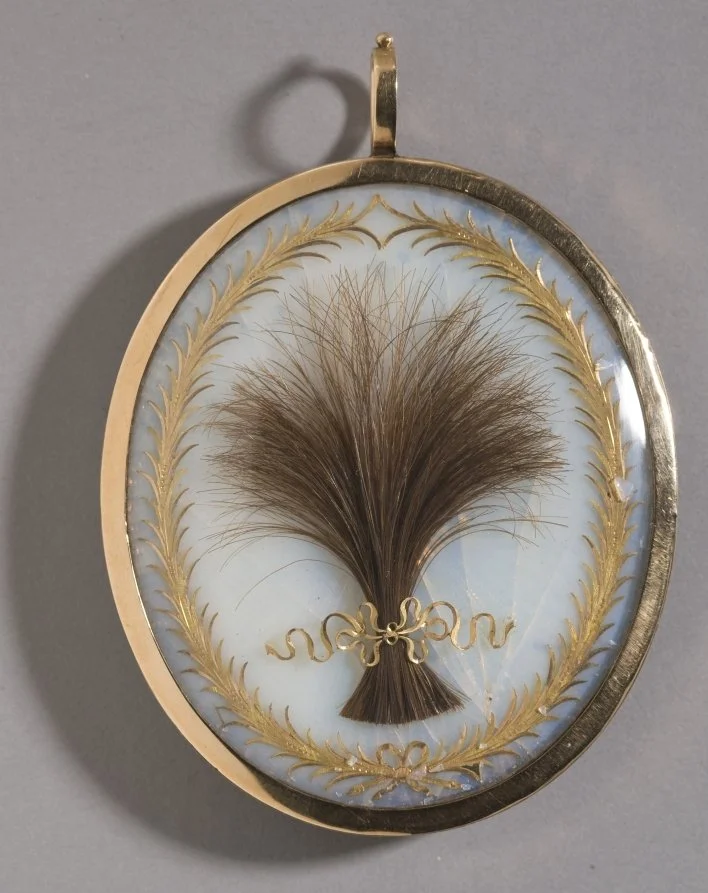
Nicholas Freese, Portrait of a Man (reverse), late 18th century, watercolor on ivory in a gold frame with glazed hair reverse and opalescent glass over pressed foil and cut gold (or cut paper), Cleveland Museum of Art.
British Portrait Miniatures
Exchanged as personal mementos or as signs of political allegiance, portrait miniatures first appeared in the French and English courts of the 1520s. Evolved from the art of medieval illuminated manuscripts, miniatures provided a less expensive and more personal alternative to traditional full-scale portraiture. Portrait miniatures were portable luxury objects treasured by their owners both for the cherished portrait and the precious materials from which they were crafted. These might include gold, enamel, diamonds, and locks of human hair.
This exhibition features thirteen miniatures spanning 230 years, representing a variety of approaches to ornamenting the back of a portrait and suggest the wealth of information that can be hidden from view. Their small scale and the fact that people often wore them as jewelry and carried them on their person conveys a different type of intimacy than larger scale portraits. Sitters are often depicted more informally and with the gaze of a particular loved one in mind. Miniatures remained popular for nearly three centuries. The advent of photography in 1839 offered a more cost-effective method of capturing a keepsake likeness, and the portrait miniature faded from fashion.
Hidden Insights: The Backs of Portrait Miniatures
Portrait miniatures were portable luxury objects treasured by their owners both for the cherished portrait and the precious materials from which they were crafted. Frequently, patrons would spend substantially more than the cost of the portrait to have it placed in a gold or silver case outfitted with pearls, enamel, diamonds, colored glass, or elaborate hair work.