Mastering the copy
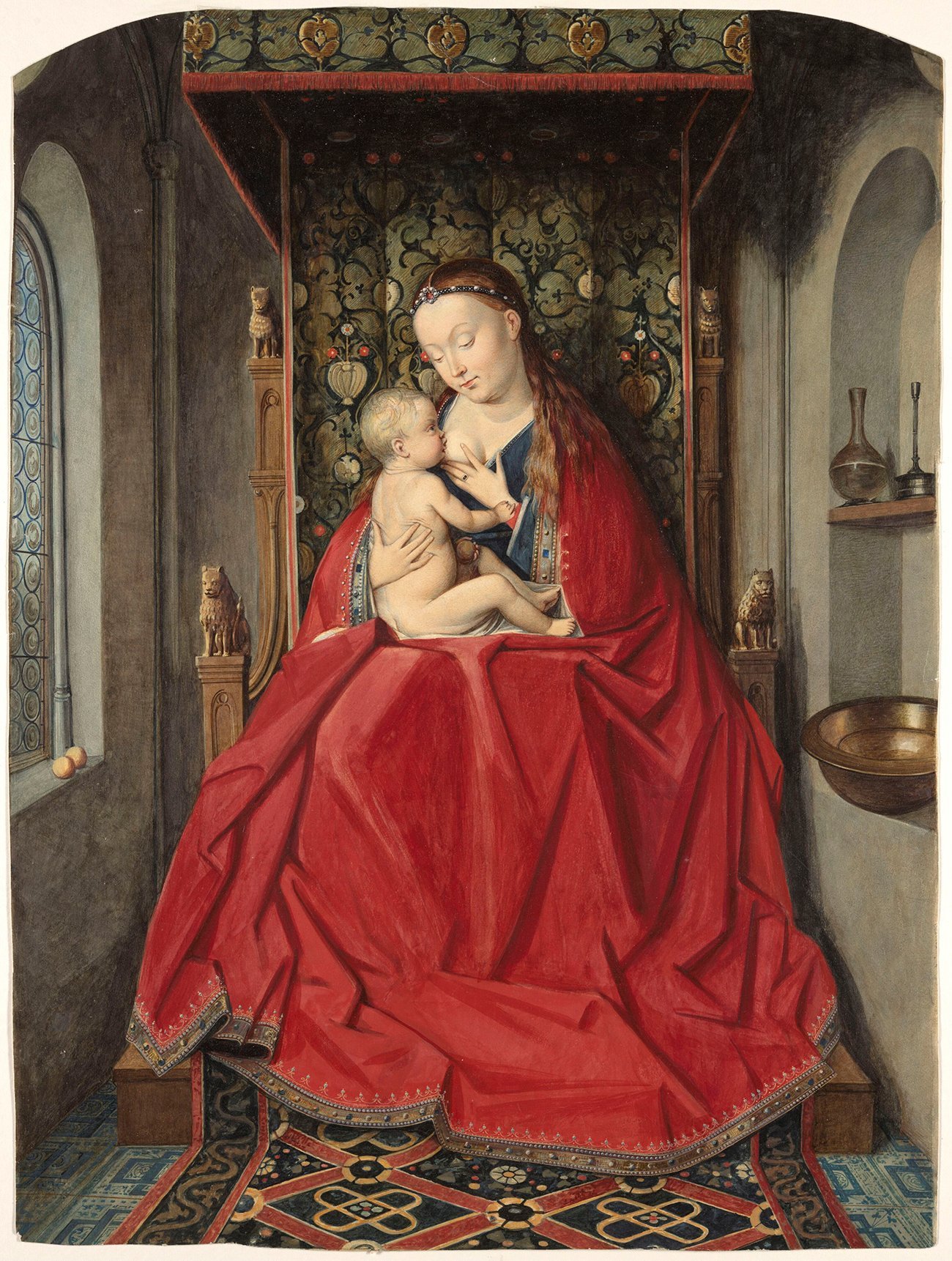
Hans Johan Frederick Berg, Lucca Madonna, 1860, wateroolour after a painting by Jan van Eyck, Nasjonalmuseet, Oslo. Photo: Nasjonalmuseet / Andreas Harvik
Over the centuries, the term “copy” has meant much more than just a reproduction. Artists often depicted original works in other media – rendering paintings as engravings, or sculptures as drawings. In the process, they produced meticulous, professionally executed versions of the originals that were new, independent works in their own right.
For generations, copying was an essential part of an artist’s training. Before students were allowed to draw from a live model, they had to copy the works of others, with the goal of creating an accurate reproduction. From the National Gallery’s copyist register, we learn that both amateurs and famous artists applied for permission to copy in front of the originals in the exhibition halls.
Artists used original artworks not just as exercises, but also to practice the personal touch. They often invested a lot of effort in replicating works to have them available as handmade copies or reproductions based on other techniques. The amateur artist Emma Dahl, for example, developed a new career copying paintings after she stopped working as a professional musician.
The need for shared visual references and preferences was as strong in the 19th century as it is today. For those who couldn’t afford to travel in order to view the originals, reproductions in books, print portfolios and magazines helped to open the door to the world of art. As reproductions that were widely shared, copies are a crucial aspect of art history.
The exhibition presents works that have rarely or never been shown before, including copies of renaissance and baroque masters by artists such as Ludvig Karsten, Hans Heyerdal and H.J.F. Berg. It also offers insights into how 19th-century artists copied other artists art works, and how some built new careers from copying.
Based primarily on copies from the National Museum’s own collection – in the form of drawings, prints, paintings and sculptures – the exhibition also includes unique archival material, such as copyist registers and applications for permits to copy in the National Gallery.