The Book of Esther in the Age of Rembrandt
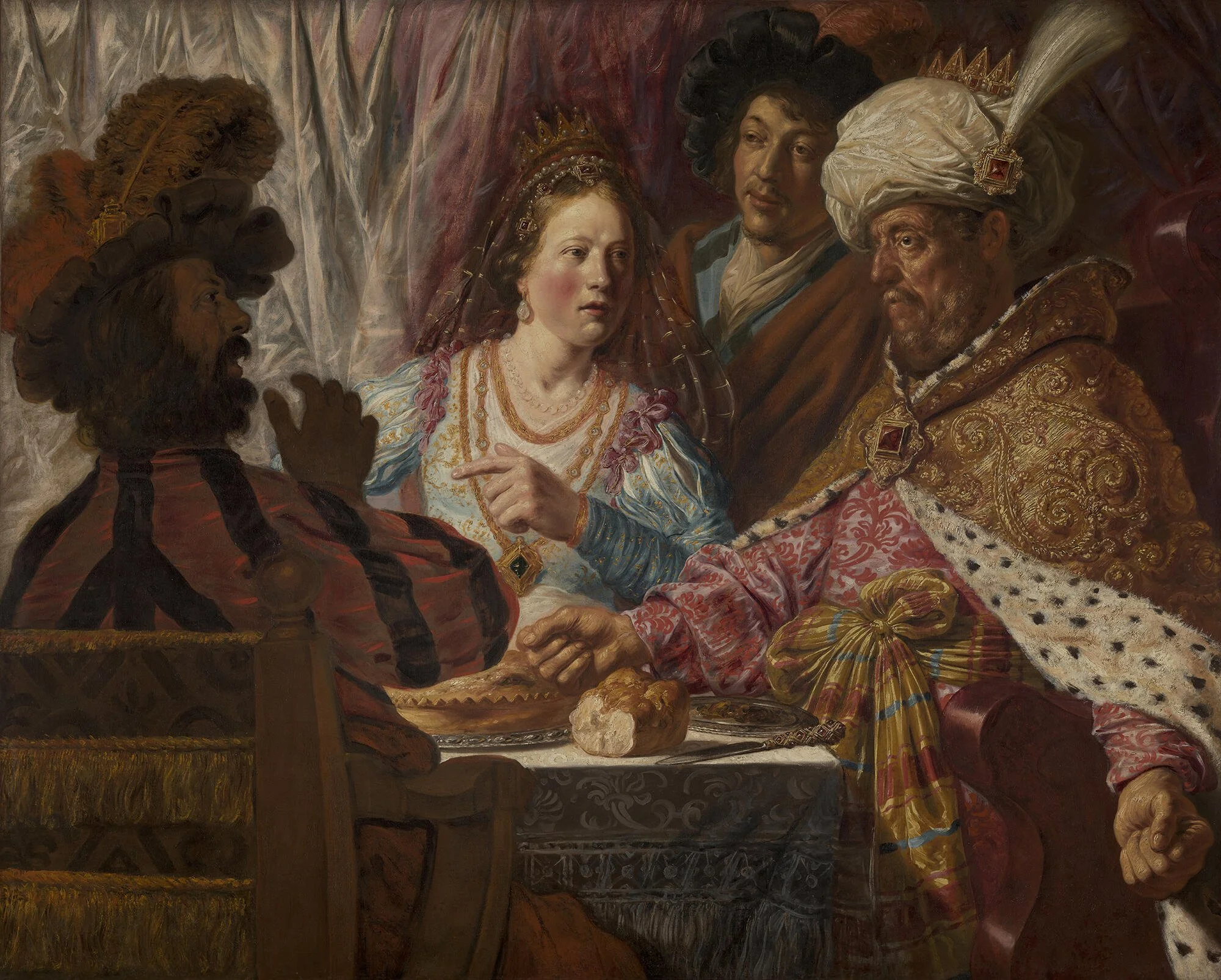
Jan Lievens (Dutch, 1607–1674), The Feast of Esther, about 1625, North Carolina Museum of Art, Raleigh. Purchased with funds from the State of North Carolina, 1952.
The biblical book of Esther, read annually on the Jewish holiday of Purim, tells the story of how an orphan became a queen and how a queen saved her people. Plucked from obscurity for her beauty and chosen as the new wife of Persian monarch Ahasuerus, Esther hid her Jewish identity until she had no choice but to risk her life and reveal her origins in order to rescue her people from destruction. But how did an ancient Jewish heroine become a symbol of national identity in the Christian Netherlands of the 1600s?
The Book of Esther in the Age of Rembrandt explores how this story was a source of cross-cultural inspiration for Jewish and Protestant communities in the nascent Dutch Republic. Once freed of Spanish Catholic oppression, the Netherlands was a flourishing center of global trade and cultural exchange. Its cosmopolitan capital, Amsterdam, was home to artists such as Rembrandt van Rijn (1606–1669) as well as Jewish immigrants who were his neighbors and models.
For Jewish communities in the Netherlands, celebrating Purim became a meaningful expression of Jewish culture and a new ability to practice their religion openly. Dutch Protestants saw in Esther a mirror of themselves in their fight for independence from Catholic Spain. At the same time, the vibrant, growing Jewish community in Amsterdam and expanding trade contacts with the Middle East fueled interest in Esther and the lush, imagined Persian world she inhabited. Her visually rich story became an intriguing and repeated subject for Rembrandt and other artists of the period.
The Book of Esther in the Age of Rembrandt is the first major exhibition of 17th-century Dutch art at the Gardner. Through an array of Dutch paintings, tapestries, decorative arts, as well as Persian textiles and Jewish ceremonial objects, the exhibition shines light on the ways in which one heroine’s bravery has inspired people across time and faiths.