The Power of Fashion in the Roman Empire
Step into a world of colour, drapery, magnificent footwear and fabulous hairstyles as the exhibition The Power of Fashion in the Roman Empire explores fashion in antiquity for the very first time. This ambitious special exhibition, extending over more than 1,000 m2 is a first in Denmark and internationally.
Uniting the museum’s exceptional collection of Roman sculpture and unique loans from international museums, the exhibition examines how people in the Roman Empire used clothing and jewellery to express status, identity and power.
At a time when fashion and staging the self demand more attention than ever, antiquity opens new perspectives on the ways – then and now – we view ourselves and each other.
What we wear is a way to show who we are and who we aspire to be. This was also true during the Roman Empire. Exploring its sculptures reveals the ideals of the period.
The Power of Fashion in the Roman Empire uncovers the visual language of ancient statues. Details such as draping, material and colour are clear indicators of the social standing and political role of those portrayed.
The sculptures are primarily of the men and women at the top of society who commissioned them, where every detail was a conscious choice. But behind the backs of these idealised portraits wicked tongues hissed, because the people of antiquity had opinions on those in power, just as we have today.
The exhibition’s 12 listening posts invite visitors to discover the gossip, satire and cutting remarks of antiquity. Through the writings of male Roman authors, visitors learn how rulers’ appearance and dress were debated and mocked, often with the explicit purpose of questioning their morality and leadership qualities.
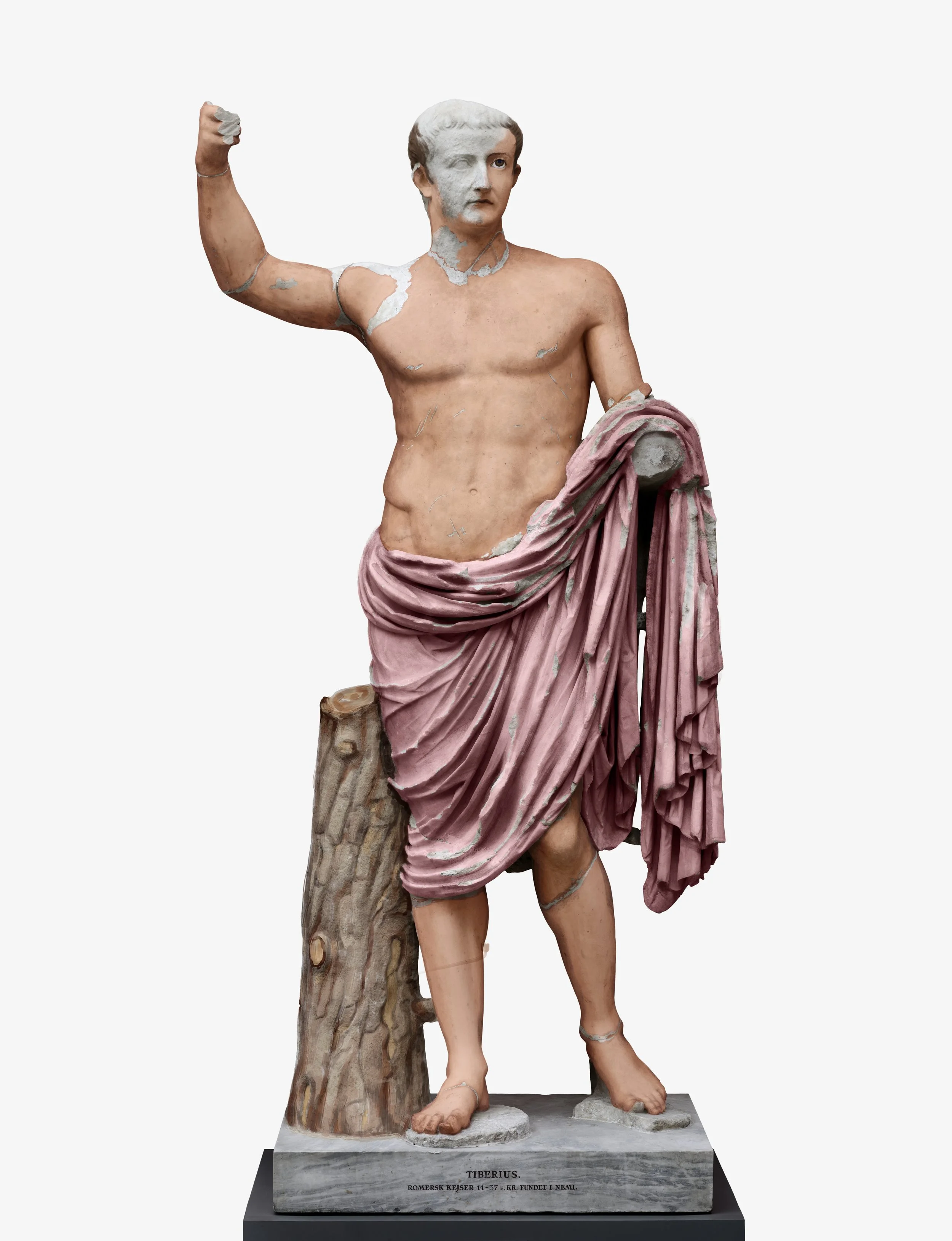
A central work in the exhibition is a portrait sculpture of the Roman emperor Tiberius. Recent research has revealed that the garment he wears was originally a delicate shade of pink, demonstrating that certain colours and clothing could have very different power associations for people in the Roman Empire than they do for us today. The aesthetics and colours people chose in antiquity do not necessarily correspond with modern gender stereotypes.
Today a half-naked ruler wearing pink might come as a surprise, but for the Romans it was a clear visual statement of power, luxury and divine authority.
Covering over 1,000 m2, The Power of Fashion in the Roman Empire is an exhibition that appeals to the senses. Custom-made scents, research-based colours, a scenography of textiles and audio narratives all contribute to an immersive experience and space for reflection on people’s obsession – then as now – with status, identity and appearance
The Glyptotek has worked with the Danish skincare company Karmameju to create scents based on ancient perfume recipes.
There are four scent stations providing insight into Roman perfumes and their relationship to gender roles and status. We gain insight, among other things, into which fragrances men and women preferred, and how perfume functioned as a sign of status and belonging.
The exhibition has a number of unique loans from other museums. These include three extremely rare tunics from the Roman Empire, exhibited beyond the confines of the British Museum for the very first time.
From the archaeological museum in Burdur in Türkiye comes a colossal portrait sculpture of Emperor Septimius Severus wearing lionskin boots. This is the first time the sculpture will be shown outside Türkiye.
The exhibition includes contemporary interpretations of power and fashion by three design graduates from the Royal Danish Academy.
These silhouettes are presented on pedestals in the Glyptotek’s monumental Central Hall.