Korean National Treasures: 2,000 Years of Art
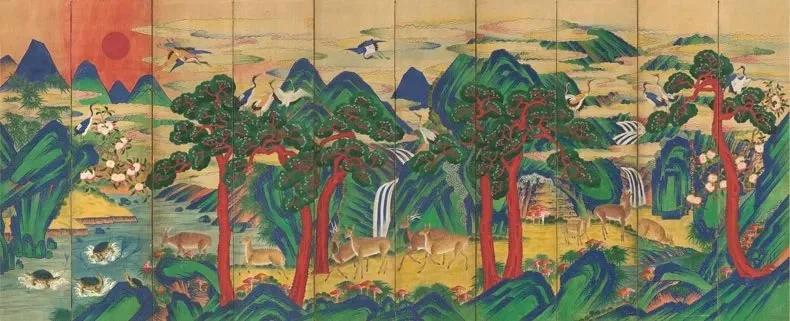
Ten Symbols of Longevity (19th century), Joseon court painters. National Museum of Korea, Seoul
From 6th-century gilt bronze Buddhist sculpture through Joseon dynasty painting and white porcelain and contemporary paintings of the late 20th century, the works of art in this exhibition demonstrate the artistic legacy produced on the Korean peninsula over millennia.
Once privately held, these artworks now belong to the Korean people thanks to a single groundbreaking gift from the family of Lee Kun-Hee, late chairman of Samsung Group. In 2021 the family donated over 23,000 works to the Korean government for public audiences to study and appreciate in perpetuity. Lee Kun-Hee and his father, Lee Byung-Chull, collected exceptional and storied objects from throughout Korean history as a means of preserving and celebrating the nation’s cultural heritage. This exhibition marks the first time the works are on public display.
Among the 140 artworks on view—including modern and historical painting, ceramics, and objects made for Buddhist worship and scholarly study—22 are officially recognized as National Treasures or Treasures by the Korean government. These objects are recognized as remarkable examples of their type and distinguished for their exceptional historic, artistic, and academic value.