Van Dyck, the European
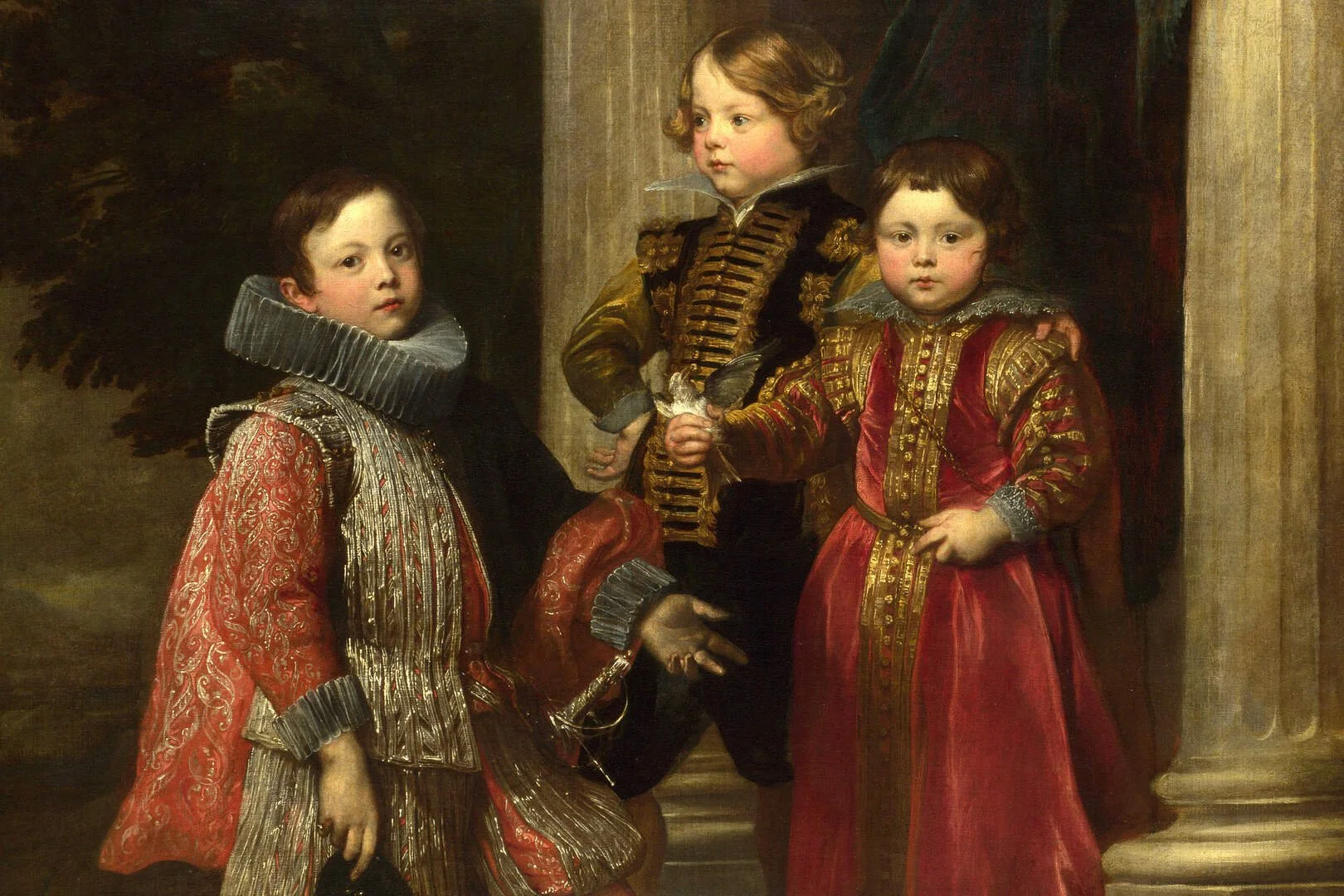
Anthony Van Dyck, Portrait of Alessandro, Vincenzo and Francesco Maria Giustiniani Longo (?) (detail), 1626-27, National Gallery, London.
In 1621, the young aFlemish painter Anthony Van Dyck arrived in Italy to study the great Italian masters as well as in search of new patrons.. Introduced to the Genoese environment by other Flemish artists and his master Pieter Paul Rubens , he succeeded in gaining commissions from several aristocratic families. The current exhibition in Genoa’s Palazzo Ducale displays 50 of his works, not only from this period but also from his Flemish beginnings and later success in London. It includes on loan from 32 museums across 22 European cities, including the Louvre in Paris, the Prado in Madrid, and the National Gallery in London.
Van Dyck’s greatness lies not only in the brilliance of his technique, but also in his remarkable ability to adapt his art to different patrons and settings — skillfully adjusting his style to charm new clients, reflect their tastes, and capture the spirit of each place where he worked. Three paintings by Rubens, Van Dyck’s teacher, offer insightful comparisons..
The exhibition unfolds through the rooms of the Doge’s Apartment, including the stunning Ducal Chapel. Visitors follow a compelling narrative tracing Van Dyck’s artistic evolution across the three key cities of his career — Antwerp, Genoa, and London — discovering how each cultural environment shaped his vision and style.
From two youthful self-portraits to the elegant portraits of Genoese, Antwerp, and English ladies, from royal commissions for King Charles I of England to evocative mythological and religious works, the exhibition offers an immersive journey into the creative world of a true genius.